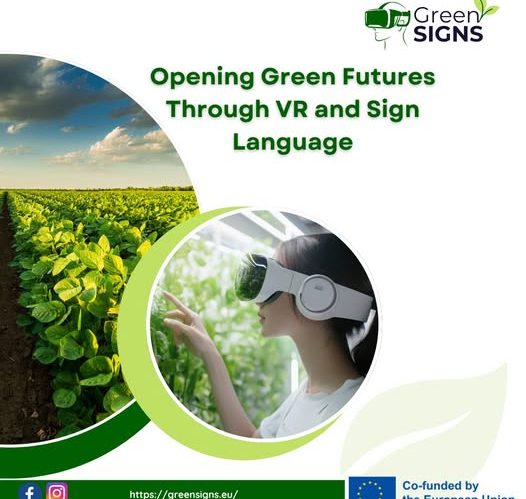

 Today we’re diving deeper into how Virtual Reality can support Deaf and Hard-of-Hearing youth in exploring green jobs and sustainability skills.
Across universities and research centres, experts agree that VR is one of the most promising tools for accessible, visual-first learning, especially for Deaf learners. This aligns directly with what we are building inside GreenSIGNS: immersive green-skills simulations designed with Sign Language accessibility from the start.
 Why VR matters for our project:
 It removes communication barriers by presenting information visuallyIt helps learners experience work environments they cannot easily access in real lifeIt increases engagement, comprehension and retention for Deaf learnersIt supports green-skills development in a safe, immersive way
From eco-tourism to renewable energy and circular-economy tasks, VR allows Deaf youth to explore green workplaces without limitations, preparing them for real careers in the green transition.
VR allows Deaf youth to explore green workplaces without limitations, preparing them for real careers in the green transition.Because a sustainable future only works if everyone can take part in it.
And accessibility must be part of green innovation.


 Studies Supporting This Work
Here are some of the articles confirming why VR is a powerful tool for Deaf-accessible learning and why GreenSIGNS’ approach is both timely and necessary:
 Virtual reality in sign language education: opportunities, challenges, and the road aheadThe Impact of 2D and 3D Gamified VR on Learning American Sign LanguageMeeting the needs of deaf students with digital sign language and virtual realityDesign of Digital Sign Language Interpreters (DSLIs) Based on Virtual Reality for Deaf StudentsA user study on deaf individuals in VR social spaces, the emergence of the VR sign language
 Customizing Generated Signs and Voices of AI Avatars: Deaf-Centric Mixed-Reality Design